Buying in Canton can feel like a math problem before it feels like a home search. Prices are high, competition can move quickly, and your monthly payment may look very different once you add taxes, insurance, and maintenance. That is exactly why house hacking gets so much attention here. If you want a practical way to lower your carrying costs while still buying a home in Canton, this guide will walk you through the local options, the rules that matter, and the checks you should make before you commit. Let’s dive in.
Why house hacking matters in Canton
House hacking is usually not about finding a dirt-cheap property in Canton. It is about using rental income from part of the property to help offset the cost of ownership in a higher-priced market.
That framing matters here. Census QuickFacts reports a median owner-occupied home value of $710,600 in Canton, along with a 73.6% owner-occupied housing rate, median gross rent of $2,315, and median household income of $143,381. In other words, Canton is largely an owner-occupied community where homeownership can be attractive, but the monthly numbers still need to work.
Recent market data point to that same reality. Realtor.com’s March 2026 snapshot showed a median listing price of $699,900, a median rental price of $3,120, median days on market of 25, and a 99% sale-to-list ratio, with Canton described as a seller’s market. If you are trying to buy with a house-hack plan, you need a strategy that is realistic, local, and numbers-driven.
What house hacking looks like in Canton
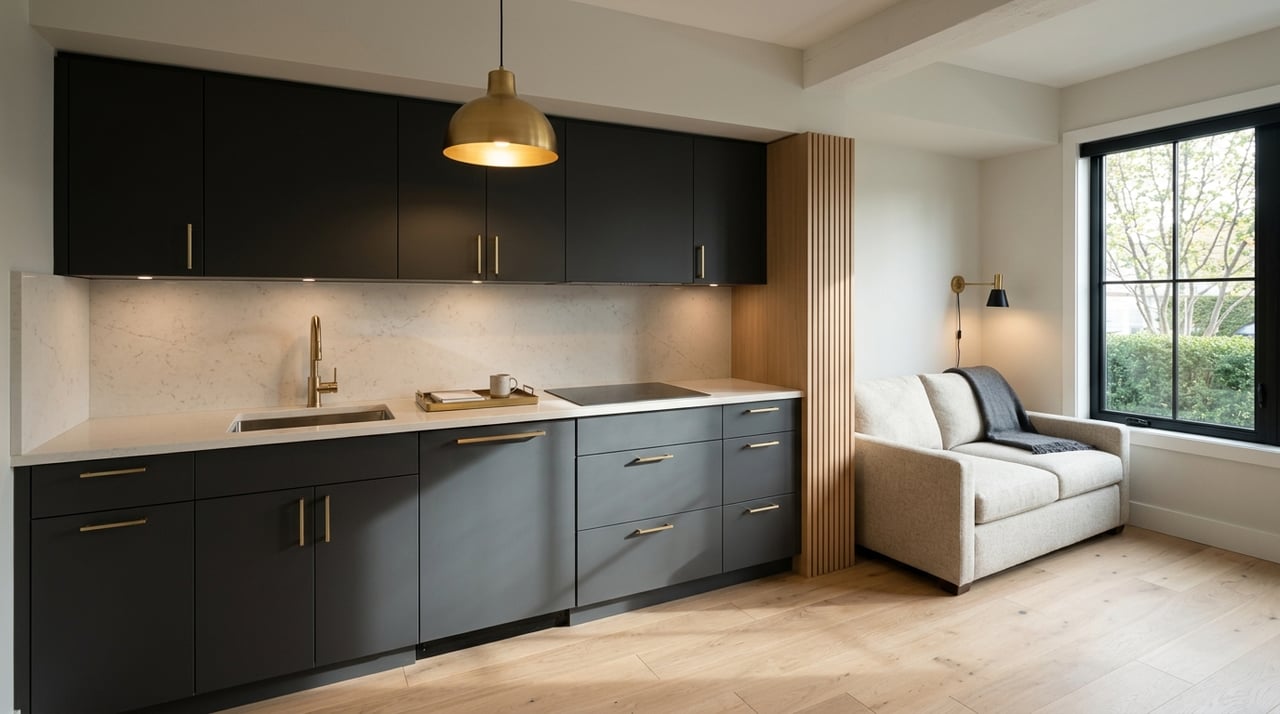
In Canton, the most straightforward house-hack path is often a single-family home with a legal accessory dwelling unit, also called an ADU. That gives you the chance to live in the main home and rent the secondary unit, or in some cases live in the ADU and use the main house differently, depending on your goals and financing.
Small multifamily properties can also fit a house-hack plan, especially if you want to live in one unit and rent out the others. But in Canton, those opportunities are more location-specific than the ADU route. The local zoning framework makes ADUs the clearest path for many buyers.
ADUs are the clearest local option
Canton’s zoning bylaw defines an ADU as a secondary dwelling unit located within or on the same lot as a detached single-family home. It must remain subordinate in size and preserve the look of a single-family property.
The bylaw allows one ADU as of right in zoning districts where single-family homes are allowed as of right. That is important because it gives buyers a more predictable route than a fully discretionary process. Canton also requires a separate entrance, a minimum lot area of 5,000 square feet, compliance with primary setbacks, and final building permit and certificate of occupancy approval.
There is also a size cap. In Canton, the ADU can be no larger than the smaller of 900 square feet or half the size of the principal dwelling. That matches the statewide standard under Massachusetts’ 2024 ADU law.
Older in-law setups need extra review
Not every extra kitchen or finished lower level should be treated as a legal ADU. Canton still has a separate legacy category called an Accessory Apartment, and that term refers to certain pre-existing non-conforming units that were created by special permit and recorded before August 6, 2024.
That means you should not assume an older in-law suite automatically qualifies as a current ADU. Before you buy, verify exactly how the space is classified and whether it has the permit history to support your intended use.
Multifamily options exist in specific areas
If you are hoping to house hack with a duplex, triplex, or four-unit property, Canton may still offer opportunities, but they are more concentrated in certain locations. The town’s MBTA Communities compliance release states that the Canton Junction Overlay District allows neighborhood-scale, transit-oriented housing near commuter rail stations.
The current zoning bylaw also says multifamily housing is permitted as of right within that overlay district. For buyers, that means some of the best small multifamily possibilities may be tied to transit-oriented zoning areas rather than spread evenly throughout town.
Local rules you need to know first
House hacking only works well when the property is legal for the use you have in mind. In Canton, that means understanding both the statewide ADU law and the local bylaw.
Massachusetts’ 2024 ADU law sets the baseline for what municipalities can and cannot require. A single ADU in a single-family residential zoning district cannot be prohibited, cannot be forced through discretionary zoning approval, cannot exceed the smaller of 900 square feet or half the principal dwelling, and cannot be subject to more than one additional parking space.
The law also says no extra parking can be required when the ADU is within a half-mile of transit. It further states that a single ADU cannot be conditioned on owner occupancy. More than one ADU on a single-family lot would require a special permit.
Canton parking and permit rules
Canton’s local bylaw still controls the local details of compliance. The town requires one off-street parking space per ADU, but there is no extra parking requirement above the underlying zoning when the unit is within 0.5 miles of a commuter rail, subway, ferry, or bus station.
The town also requires a building permit and a certificate of occupancy. Just because a space looks rentable does not mean it is approved for use as a separate dwelling unit.
Site conditions can change the plan
Some homes will need more review than others. Canton’s Building Division handles permits for construction, occupancy changes, alterations, repairs, demolition, reconstruction, and relocation.
The Zoning Enforcement Officer handles bylaw compliance and hearings when a project does not fit zoning rules. The bylaw also flags possible Conservation Commission involvement in flood hazard areas and Board of Health review where public sewer is not available. If you are buying with an ADU or conversion plan, these checks matter early.
The numbers matter more in Canton
A good house hack is not just legal. It also has to be financially comfortable for you.
Canton’s 2026 residential tax rate is $9.75 per $1,000 of assessed value. Property taxes are a real part of the monthly carrying cost here, especially when layered with mortgage payments, insurance, utilities, and future repairs.
The local cost and rent data show why careful modeling is so important. Census data report a median selected monthly owner cost with a mortgage of $3,239, while median gross rent is $2,315. Realtor.com’s March 2026 data showed a median rental price of $3,120, but asking rents and actual long-term rental performance are not always the same thing.
That means you should not assume the extra unit will fully cover your payment. In many cases, the goal is to reduce your monthly burden enough to make ownership more manageable, not to eliminate it.
Financing angles buyers may consider
HUD states that FHA financing is available for one- to four-unit owner-occupied principal residences, with down payments as low as 3.5% for qualified buyers. That can keep owner-occupied duplexes, triplexes, and fourplexes in play if you are buying a legal one- to four-unit property and plan to live in one unit.
Even so, financing is only one piece of the puzzle. In Canton, the bigger question is whether the expected rental income leaves enough room for taxes, insurance, maintenance, and vacancy without stretching your budget too thin.
What to verify before you buy
If you are serious about house hacking in Canton, your first job is not decorating the extra unit. It is confirming what the property legally is, what it can become, and what it will cost to carry.
Start with the basics and verify each item before you rely on rental income in your plan.
Your Canton house-hack checklist
- Confirm the property’s legal use and zoning status
- Verify whether the extra unit is a current legal ADU or a legacy accessory apartment
- Review permit history for any conversions, additions, or occupancy changes
- Check lot size, setbacks, and whether the layout matches current bylaw requirements
- Confirm parking compliance, especially if the property is near transit
- Ask whether flood hazard review or Conservation Commission involvement may apply
- Confirm sewer availability or whether Board of Health review may be needed
- Model your monthly costs, including mortgage, taxes, insurance, utilities, and maintenance
- Compare realistic long-term rental income against your full carrying cost
This kind of diligence can save you from buying a property that looks flexible on paper but is much harder to use in practice.
A smart local strategy for buyers
In Canton, the simplest house-hack story is usually a legal ADU or secondary unit tied to a single-family home. Multifamily opportunities can work too, but they tend to be more tied to specific zoning areas, especially near transit.
The key is to stay grounded in the local rules and real numbers. In a market with a roughly $700,000 median listing price, quick market pace, and meaningful monthly ownership costs, a house-hack plan should be built on verification, not assumptions.
If you are weighing whether a Canton property could work as a house hack, it helps to have a team that can look at the purchase from more than one angle, including acquisition strategy, renovation feasibility, leasing potential, and long-term operations. To talk through your options, connect with Smith & Oak Realty.
FAQs
What does house hacking in Canton usually mean for local buyers?
- In Canton, house hacking usually means buying a home with a legal ADU or a small multifamily setup so you can live in one part of the property and use rental income from the other unit or units to help offset carrying costs.
What are the main ADU rules buyers should know in Canton?
- Canton allows one ADU as of right in districts where single-family homes are allowed as of right, with a separate entrance, a 5,000-square-foot minimum lot, a maximum size of the smaller of 900 square feet or half the main home, and required building permit and certificate of occupancy approval.
Can a Canton ADU be rented long-term?
- Yes. Massachusetts’ 2024 ADU law allows a single ADU to be rented and limits how much local zoning can restrict that use.
Do you have to live in a Canton property with an ADU?
- State law says a single ADU cannot be conditioned on owner occupancy, but your loan program may still have owner-occupancy requirements if you are using owner-occupied financing.
Are older in-law suites in Canton automatically legal ADUs?
- No. Some older units may fall under Canton’s legacy Accessory Apartment category, so you should verify the legal classification and permit history before assuming the space can be used as a current ADU.
What should buyers verify before purchasing a house-hack property in Canton?
- Buyers should verify legal use, permit history, parking, setbacks, floodplain or septic-related issues, and whether the secondary space is a current legal ADU or a legacy accessory apartment.